Beginning of Microbiology.
Microbiology
The beginning of Microbiology
Microbiology can be considered the basis of science studies since its definition of microbiology means the "study of small life" life begins small. Life first began with anaerobic heterotrophic bacteria formed in the Precambrian age of Earth inside its oceans made up of hydrogen. The first autotrophic bacteria started to photosynthesize light and started to oxidize the ocean's and the atmosphere to create new life above sea level and below sea level. As well as several different domains and kingdoms of microbiol life from their common ancestor. This how life merely began and took billions of years to continue the evolution of life and formed multicellular organisms within the early ages of the planet Earth. Now the difficult of tasks is bestowed for how life began to develop differently for bacteria to divide into different groups.
Differences in the kingdoms of microbiology
Microbes can be divided in several different types of Domains and kingdoms. The main three different types of domains for microbes, those being Archea, Bacteria, and Eukarya. The two domains Archea and Bacteria are comprised of Prokaryotes since they lack the organelles like the golgi apparatus, mitochondria, and the Endoplasmic Recticulum. The Eukary also have 4 different those kingdoms being protists, fungi, plants and animals. Bacteria comes in many different shapes and sizes those being rods, spirochetes, dipplococci, coccobacili, vibrios, streptococci, staphylococci, and tetrads. Each of these are different groups of bacteria based on their shapes.- Rods- straight bacteria
- Spirochetes-curved bacteria
- Dipplococci-two sphere bacteria
- Coccobacili-straight and rod bacteria
- Vibrios-curved rod bacteria
- Streptococci-sphere bacteria in chains
- Staphylococci-groups of sphere bacteria
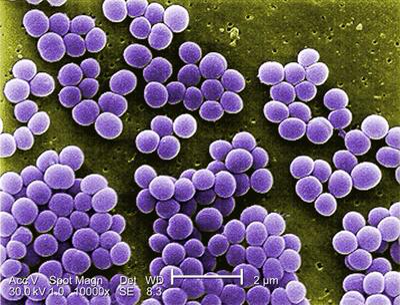
As shown bacteria can take many different shapes and forms as why microbiology can be hard for it requires extensive research but this on the core elements of microbiology, those being the history of bacteria, when they were discovered and how they have changed society.
Nanotechnologies
In the course or courses of microbiology, nanotechnology would be a discussion that can take up an entire assignment on itself, however this only be a brief synopsis of nanotechnology can as the technology is still relatively new to understand such advance but may help humanity for the better. For the nanotechnologies has ton of beneficial effects such as distributing drugs to different parts of cells that require attention through the bloodstream using nano particles. Similar methods can be taken into consideration like the use of nano-sponges or nano particles covered in red cell membranes to attract and capture toxins within the body. In hopes of nanotechnology people are looking into the future into making regenerative medicine by manipulating cell . components to regenerate lost limbs or organs with the possible use of stem cells and nano-particles could attack cancer cells that may have gone out of control while repairing. Despite the positives of nanotechnologies, their are harmful effects to nanotechnology. Some of those effects being anti-peace groups injecting nano monitors into important beings so that they can hamper their privacy or just kill them by destroying their cells from the inside out. Their is also the fact that most of the new technology is expensive and only the rich could afford to have such surgeries done and the nano-particles could change and harm how to human body works.

ico. “About Microbiology – Viruses.” Microbiology Online, 2018, microbiologyonline.org/about-microbiology/introducing-microbes/viruses.
nanoday | An Outline of Nanotechnology in Medicine, 17 Nov. 2015, nanoday.com/single/1009/an-outline-of-nanotchnology-in-medicine.
Viruses
One of the more basic and advance creatures or things in microbiology are viruses since its hard to classify them at all. Viruses are microscopic things that hardly constitute as living beings as they need free will to survive and viruses don't have any free will as they can only survive and live in a host body or cell. in fact they have been included to be in their own kingdom altogether as they have little apart. The only thing that commonly known about viruses are they are composed or and their purpose. Their purpose quite simply to produce more of their own kind by inserting their own DNA or RNA into a cell so it forces the cell to reproduce viruses until the cell dies or an antibody is put into cell to cure the disease. Once the cell is making the virus the virus then leaves to another host cell to create more viruses using the cell. What the little microorganisms are simply composed of RNA or DNA surrounded by a protective coat of capsid or protein that has the ability to latch onto living cells. A common characteristic of viruses are they are often rod shaped so that can be used to identify how what they are. To be more proficient of viruses they discovered or thought when a Russian scientist in the late 1900th century was studying bacteria and noticed how certain plants were being infected and thought simply to cut the plant up turn it remains into a liquid and put it into a bacteria filter. When he tried to find the results, he found nothing since the virus was much smaller than a bacteria and decided to record his results. It wasn't until the early 20th century that people soon discovered the entity known as virus taken from the Latin words that meant poison. That is how the little bugger gotten its name and where it originally was found.
Archea
Archea has similarities to both viruses and bacteria as they are in similar existences, however each one of them are their own kingdom as they are near the core of microbiology is compounded on. The most common traits of these little creatures around the size of a micron are each one has a cell hat cover their body, a cell membrane, cytoplasm, and possibly a flagella if certain environments are right. Although these are most of its features other than the DNA or RNA, its usually what they are made of that distributes them differently compare to other microbes as their cell wall are made up of something more distinct unlike plant cells that have walls made up of cellulose or fungi cell walls chitin. Despite being not as unique a the other kingdoms in term of physiology, they are surprising as they can survive in more dangerous climates in comparison to the other two kingdoms. Archea are able to live in many different types of extreme environments as certain species can live in deep sea rift vents that go over 100 degrees Celsius or live in acids like waters that burns a person's skin. Archea have been around since the Precambrian Era however scientists find it hard to find fossils of Archean's as they physiology is similar to bacteria.
“Bacteria.” Grade 11 Biology Study Guide, 3ubiostudyguide.weebly.com/bacteria.html.
ico. “About Microbiology – Viruses.” Microbiology Online, 2018, microbiologyonline.org/about-microbiology/introducing-microbes/viruses.
nanoday | An Outline of Nanotechnology in Medicine, 17 Nov. 2015, nanoday.com/single/1009/an-outline-of-nanotchnology-in-medicine.
ATP, ATP. “Introduction To Microbiology.” YouTube, YouTube, 26 Sept. 2017, www.youtube.com/watch?v=fU0XO1X1tAE.
County, Niagara. “BIO 221 - Microbiology.” BIO 221 - Microbiology - Acalog ACMS™, Acalog, 2018, catalog.niagaracc.suny.edu/preview_course_nopop.php?catoid=7&coid=10143.
“Nanobots: Fact or Fantasy.” Big Picture, bigpictureeducation.com/nanobots-fact-or-fantasy.
Comments
Post a Comment